
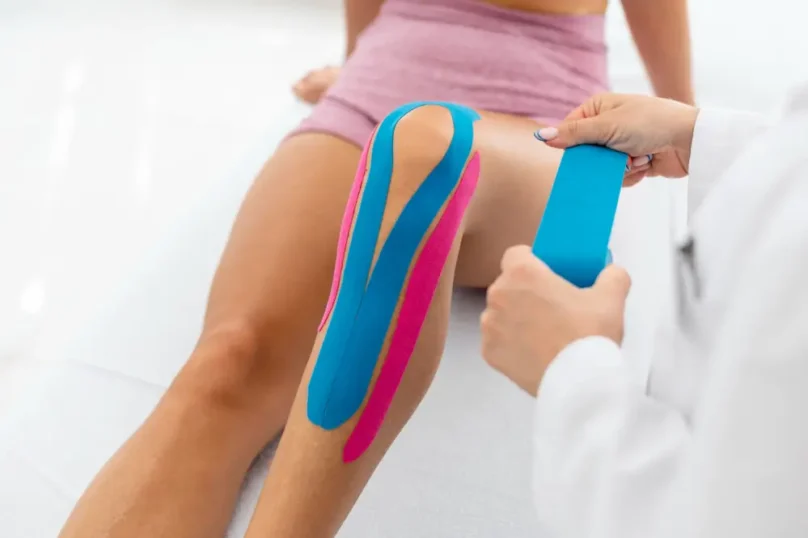
If you have ever seen colourful tapes placed on an athlete’s shoulder, knee, or back and wondered “What is that and does it really work?”, you are not alone. That technique is called Kinesiotaping, and when used correctly by trained physiotherapists, it can be a powerful support tool in recovery and movement correction.
At Anandi’s Physiotherapy, Kinesiotaping in Nagpur is used as part of a personalised rehabilitation plan to reduce pain, support healing, improve posture, and allow your body to move more freely, without restricting motion.
What Is Kinesiotaping?
Kinesiotaping, also known as kinesiology taping, is a therapeutic method that uses a special elastic tape designed to mimic the properties of human skin. Unlike rigid tapes, kinesiology tape stretches and moves with your body.
The goal of kinesiotaping is not to immobilise, but to:
It works alongside your body’s natural healing process rather than replacing it.
How Kinesiotaping Helps the Body Heal
The kinesiology tape gently lifts the skin when applied in specific directions. This creates space between the skin and the underlying tissues, improving circulation and reducing pressure on pain-sensitive structures.
This lifting effect helps:
That’s why kinesiotaping is often used along with exercises, manual therapy, and rehabilitation.
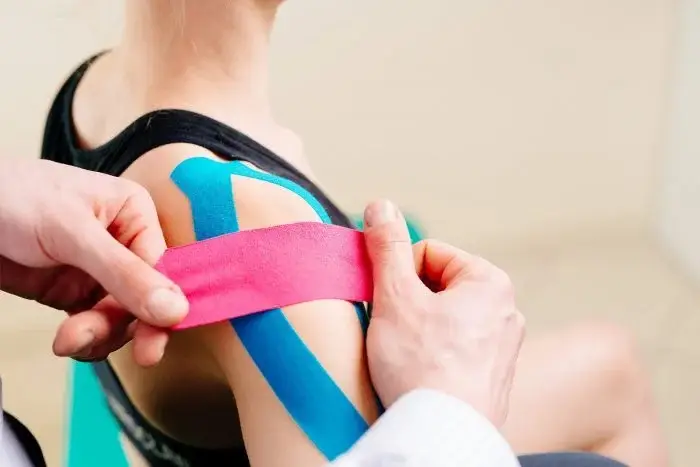
Types of Kinesiotaping Used in Physiotherapy
At Anandi’s Physiotherapy, the taping method is chosen based on your condition, body structure, and treatment goal.
“Y” Tape Application
Used to:
“I” Tape Application
Used to:
“X” Tape Application
Used to:
“Fan” or “Web” Tape
Used to:
“Donut” Tape
Used to:
Each taping method has a specific purpose and is never applied randomly
How Kinesiotaping Is Applied
Before taping:
During application:
The tape usually stays on for 3–5 days, even during bathing, unless advised otherwise.
Conditions Treated with Kinesiotaping
Kinesiotaping in Nagpur at Anandi’s Physiotherapy is used for a wide range of conditions, including:
While kinesiotaping can provide relief on its own, it works best when combined with physiotherapy treatment.
Who Can Benefit from Kinesiotaping?
Kinesiotaping is suitable for:
It is safe for most people when applied by a trained physiotherapist.
When Kinesiotaping Should Be Avoided
Kinesiotaping may not be suitable if you have:
At Anandi’s Physiotherapy, a full assessment is done before application.
Why Choose Anandi’s Physiotherapy for Kinesiotaping in Nagpur?
Expert Assessment
We don’t just tape, we assess why the problem exists.
Correct Technique
Improper taping can be ineffective. Our physiotherapists are trained in precise application methods.
Integrated Treatment
Taping is combined with exercises, posture correction, and manual therapy.
Personalised Care
Every taping application is customised for your body and condition.
Focus on Long-Term Results
We aim to restore movement, not create dependency on tape.
Cost of Kinesiotaping in Nagpur
The primary goal of Kinesiotaping applied at Anandi’s Physiotherapy is to restore function without creating a dependence on Kinesiotape. As a result, the cost of Kinesiotaping depends on the following:
Therefore, at Anandi’s Physiotherapy, the costs associated with Kinesiotaping are made clear after your evaluation so that there are no surprises.
Frequently Asked Questions (FAQs)
Is kinesiotaping painful?
How long does kinesiology tape stay on?
Can I shower with kinesiology tape on?
Is kinesiotaping safe for daily use?
What is the cost of kinesiotaping in Nagpur?
Can kinesiotaping replace physiotherapy?
Ready to Experience the Benefits?
Book your Kinesiotaping session at Anandi’s Physiotherapy and move with confidence again.